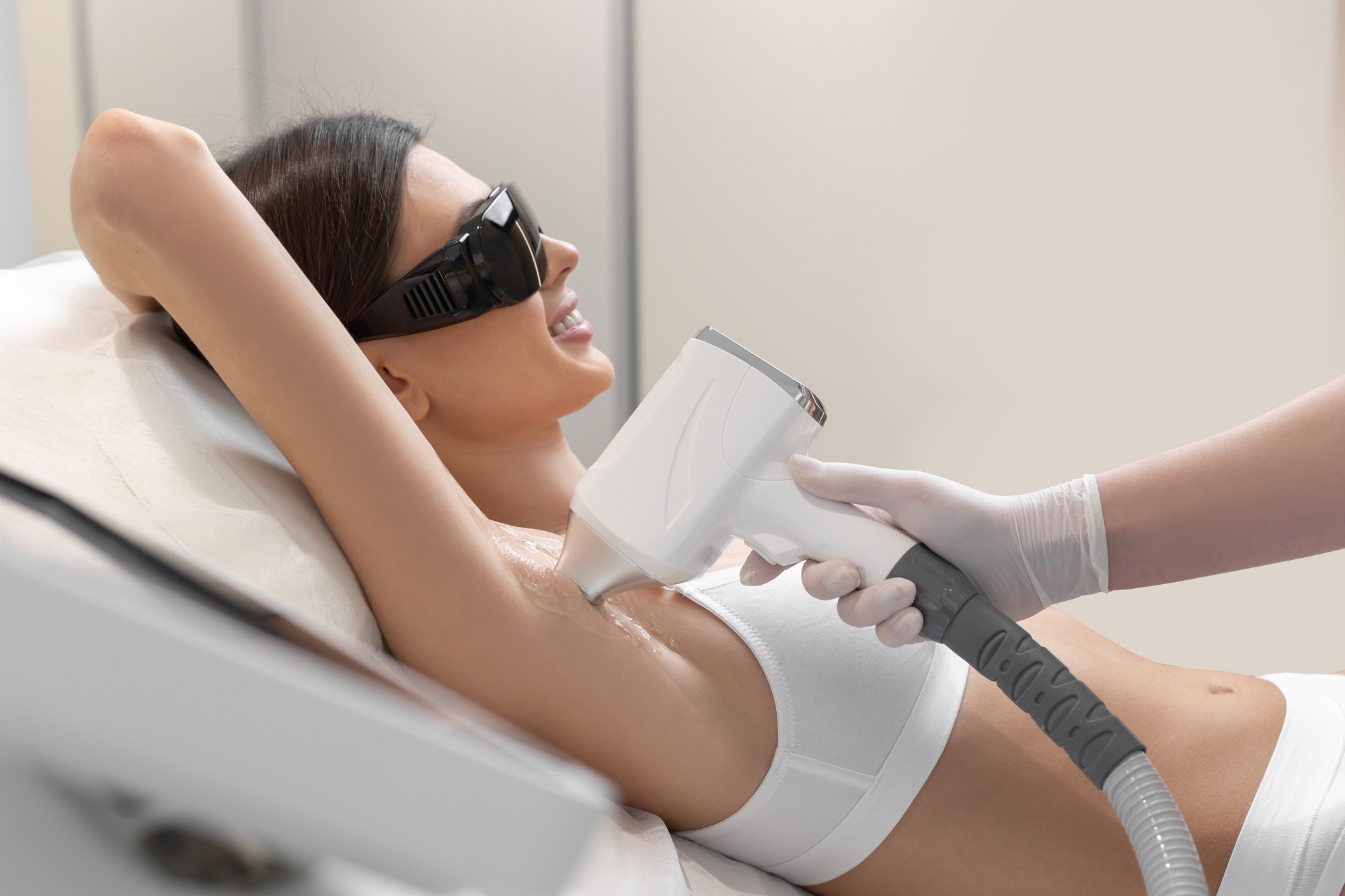
Laser hair removal is considered safe for many people when it’s performed by trained providers using appropriate settings for your skin and hair. Yet, it can still cause temporary reactions, such as redness, swelling, and sensitivity. Less commonly, more significant issues may occur, like burns or pigment changes.
In this guide, you’ll learn more about the side effects of laser hair removal and how we can minimize them.
Laser hair removal has a strong safety record in aesthetic medicine, but “safe” doesn’t mean “side-effect free.” The laser targets pigment (melanin) in the hair follicle to reduce future growth. Because skin also contains melanin, the treatment needs to be tailored to your skin tone, hair color, treatment area, and even your recent sun exposure.
Safety depends on a few key factors:
Provider assessment and settings: Conservative, customized settings reduce avoidable irritation and pigment issues.
Your medical history and skincare: Certain medications and active products can increase sensitivity.
Aftercare and sun protection: Post-treatment inflammation plus UV exposure is a common recipe for pigment problems.
Most laser hair removal reactions are short-lived and manageable. They typically peak within the first day and gradually improve over a few days, depending on how sensitive your skin is and which area you treated.
What it feels/looks like: Redness, warmth, mild swelling, and a “sunburn-like” sensation are among the most common side effects of laser hair removal. Some people also notice tiny bumps around follicles (perifollicular edema), especially in areas with coarse hair.
Why it happens: The laser heats the follicle, creating controlled thermal injury designed to reduce regrowth. Your body responds with temporary inflammation – often a sign the follicle was effectively targeted.
How long it lasts:
Often improves within a few hours
Sometimes lasts 24-72 hours in more reactive areas (face and bikini)
Helpful tips:
Use cool compresses intermittently (do not apply ice directly to the skin).
Avoid hot showers, saunas, and workouts for at least 24 hours (or longer if you stay red).
Keep skincare gentle and fragrance-free for a few days.
Pigment changes can be temporary, but they’re among the most frustrating side effects because they can take longer to fade than redness.
Two main types:
Hyperpigmentation (darkening): More common after sun exposure or when inflammation lingers.
Hypopigmentation (lightening): Less common; can occur if excessive heat affects pigment-producing cells.
Helpful tips:
Follow pre-treatment instructions about stopping irritating products.
Report any history of pigment problems during your consultation.
Other mild effects can include:
Temporary dryness or flaking (especially if you’re prone to eczema or use active skincare)
Itching as the skin calms down
Mild tenderness when touched
Follicular shedding: Treated hairs may look like they’re “growing,” but often they’re shedding from the follicle over 1-3 weeks
Brief acne-like bumps in acne-prone areas (often irritation or occlusion rather than true acne)
Most of these resolve with simple aftercare – gentle cleansing, moisturizing, and avoiding friction.
Crusting or scabbing: Sometimes follows a burn or excessive irritation; picking increases the chance of pigment changes.
Persistent pigment changes: Hyperpigmentation or hypopigmentation that lasts weeks to months.
Scarring: Rare; usually associated with deeper injury or secondary infection.
Eye injury: Preventable with proper eye protection, especially critical for facial treatments.
If you develop significant blistering, increasing pain, pus-like drainage, expanding redness, or fever, contact your medical provider for advice. In general, any worsening symptoms after the first 24-48 hours deserve a check-in.
Common pre-visit guidelines include:
Avoid tanning and heavy sun exposure before your session. Recently tanned skin is more reactive and more prone to burns and pigment changes.
Skip self-tanner (and be mindful of residue). Even if it looks faded, it can affect how energy is absorbed.
Shave (don’t wax or pluck) as instructed. Laser requires the follicle to be present; waxing/plucking removes the target.
Pause irritating skincare in the treatment area ahead of time (your provider will advise what to stop and when).
Arrive with clean skin: No deodorant, heavy lotions, oils, or makeup on the area being treated unless your provider says otherwise.
Share your history: Tell your provider about any prior pigment issues, cold sores (facial areas), keloid tendencies, or recent skin irritation.
Right after treatment, it’s normal to see:
Redness and mild swelling
A warm or tight feeling
Tiny bumps around hair follicles
Over the next several days, you may notice:
Decreasing sensitivity
Dryness or mild flaking
Hair “shedding” over 1-3 weeks (treated hairs often push out gradually)
UV exposure increases the chance of:
Burns (because the skin has more pigment/heat sensitivity)
Post-inflammatory hyperpigmentation
Prolonged redness
Plan your sessions when you can realistically protect the area from the sun.
These remove hair from follicles, eliminating the pigment the laser targets. Shaving is typically the preferred method between visits (follow your provider’s instructions).
For many people, irritation escalates when they return too quickly to strong products. Consider:
Gentle cleanser
Plain moisturizer
Sunscreen (for exposed areas)
Avoid picking, scrubbing, or using at-home devices on treated skin unless you’ve been cleared to do so.
In the first 24-48 hours, extra heat can amplify redness and swelling. When possible, skip:
Hot showers/baths
Saunas/steam rooms
Intense workouts
Tight occlusive clothing that traps heat
A past history of hyperpigmentation, sensitivity, or reactions to hair removal methods matters. The more your provider knows, the better they can tailor settings and aftercare.
Laser hair removal works when it aligns with hair growth cycles. Spacing sessions too far apart can reduce efficiency; doing them too close together can increase irritation without improving results.
Reach out for guidance if you experience:
Blistering
Significant swelling that worsens
Spreading redness
Severe pain
Crusting with drainage
Prompt attention can help prevent a small issue from becoming a longer recovery. With good communication and consistent sun protection, most people can move through treatment comfortably and confidently.
Laser hair removal can be a safe and effective way to reduce unwanted hair long-term. Knowing what reactions are normal and how to protect your skin makes the process smoother from start to finish.

About the Author
Amit Sharma
March 30, 2026