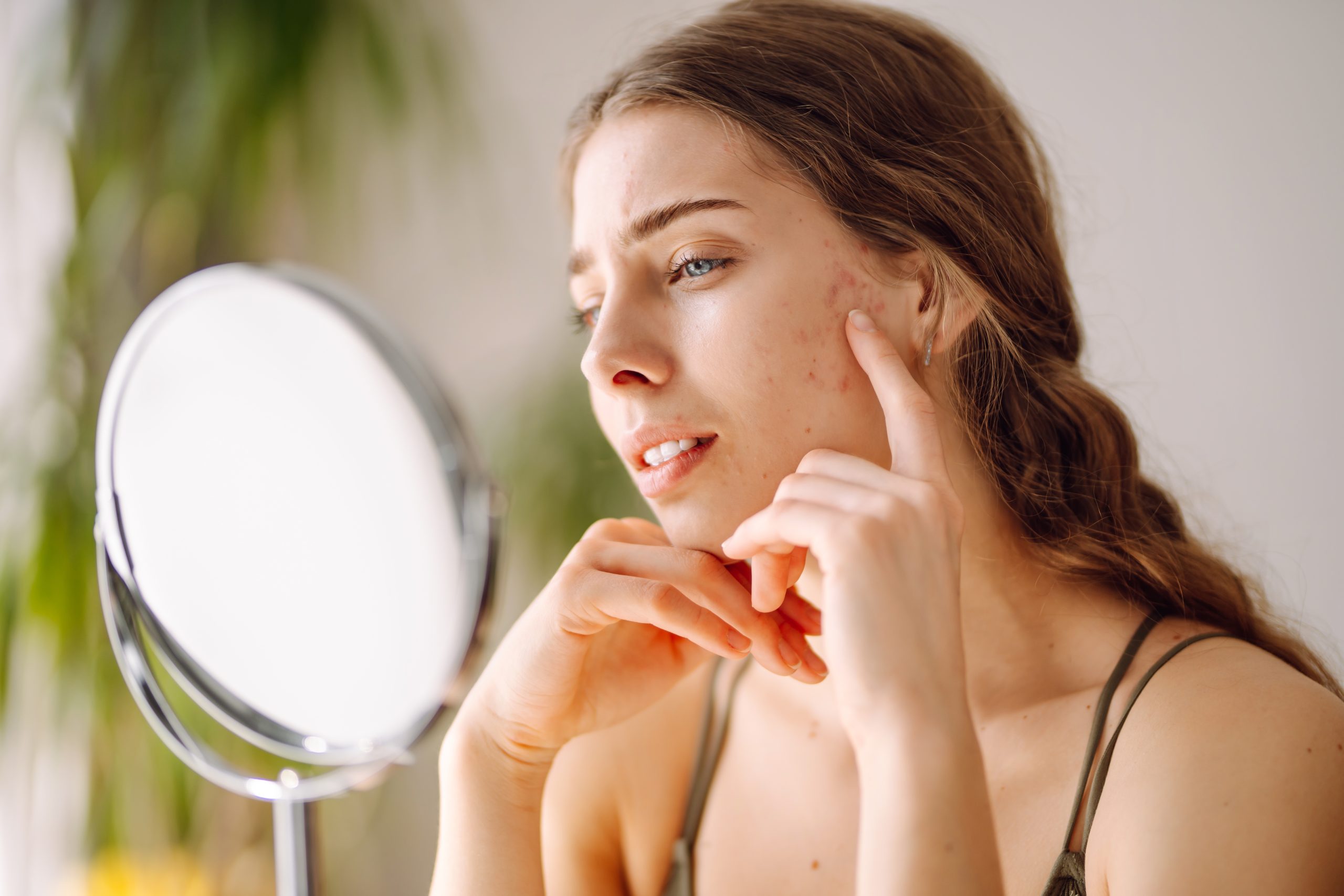
Acne scars don’t have to be permanent. Thanks to today’s advanced skin rejuvenation treatments, it’s possible to noticeably improve the appearance of scars, restore smoother skin texture, and boost confidence. The best results come from a personalized treatment plan based on your scar type, skin tone, and overall skin health, often combining laser resurfacing, microneedling, and chemical peels with a targeted at-home skincare routine.
At DermaLaser Medspa in Cumming, GA, acne scar care is medically supervised to ensure excellent results. Below, we break down what causes acne scars, the treatments that actually help, and what you can expect along the way.
Acne scars develop when inflammation from a pimple, cyst, or nodule breaks down the pore’s follicle wall. A shallow break usually heals quickly, but a deep break spills infected material into surrounding tissue, creating a larger lesion. As the body heals, it produces collagen:
Too little collagen leaves a depressed, or atrophic, scar.
Too much collagen creates a raised, or hypertrophic, scar.
Atrophic (depressed) scars are the most common type on the face:
Ice pick scars – deep, narrow pits that look like small punctures; often the hardest to treat.
Boxcar scars – broad depressions with sharp, defined edges; can be shallow or deep.
Rolling scars – wide, wave-like dips caused by damage under the skin’s surface.
Most people have a mix of these types, which is why a combined treatment plan often works better than a single method.
Treatments range from creams you use at home to professional in-office procedures. Our providers develop a strategy based on a thorough skin analysis during your in-person consultation.
Topical products can soften mild scarring and improve tone and texture, but they work slowly and have minimal effect on deep or textured scars. They also help maintain the results of professional treatments.
Retinoids – speed up cell turnover and boost collagen.
Vitamin C – brightens dark marks and protects against sun damage.
Niacinamide – calms inflammation and evens skin tone.
Alpha hydroxy acids (AHAs) – gently exfoliate to smooth texture.
Sunscreen – prevents scars and dark marks from darkening.
Because topicals can’t rebuild the collagen needed to fill depressed scars, deeper textural change usually requires professional treatment.
Professional treatments reach the deeper layers of skin where scars form. Our team is trained in a range of advanced options.
Laser skin resurfacing is a cornerstone of modern acne scar care. Our practice uses a powerful laser system for acne scar removal, delivering precise columns of thermal energy that remove damaged outer layers while heating the dermis to stimulate collagen. As the skin heals, it becomes smoother and firmer, filling depressed scars from the inside out.
Chemical peels use a specialized solution to remove the outer layers of damaged skin, revealing smoother skin underneath. Lighter peels help with discoloration and shallow scarring, while medium-depth peels improve texture. We offer a variety of peels, including the popular VI Peel, and often combine them with other treatments for a fuller effect.
Microneedling uses fine, sterile needles to create controlled micro-injuries, triggering the body’s natural healing response and stimulating new collagen and elastin. Over a series of treatments, this gradually plumps and smooths the skin, reducing the depth of atrophic scars like boxcar and rolling scars. It works well on many skin types and pairs nicely with topicals and lasers.
Microdermabrasion is a mechanical exfoliation treatment that uses a diamond-tipped wand or fine crystals to gently buff away the outer skin layer. While it won’t correct deep scars, it improves mild textural irregularities and overall brightness with little to no downtime, and can enhance the results of other treatments.
Subcision treats rolling scars tethered down by fibrous bands beneath the skin. A small instrument releases those bands, allowing the depressed area to lift. It is often combined with laser therapy or microneedling for better results.
For deep ice pick and some boxcar scars, punch techniques target one scar at a time so the skin can heal more evenly. These approaches are typically reserved for specific, isolated scars rather than widespread scarring.
Since most people have several scar types at once, the strongest outcomes come from combining modalities – for example, laser resurfacing for deep texture, microneedling to refine results, and a chemical peel to correct discoloration, or peels paired with topical retinoids. During an in-person consultation, our team will evaluate your skin and build a plan around your specific scars.
Understanding the process ahead of time helps you feel confident about your care.
The goal is significant improvement, not complete erasure. With consistent, professional treatment, most patients achieve a 50–80% reduction in scar visibility, with skin appearing dramatically smoother and more even. Full remodeling takes time as new collagen forms over weeks and months.
Virtually all effective treatments work in a series. Collagen-stimulating procedures like laser resurfacing and microneedling are typically performed about once a month, with a common plan spanning 3 to 6 sessions depending on scar severity. Your provider will create a personalized timeline during your consultation.
Downtime varies by treatment intensity. Your provider will explain what to expect and how to care for your skin so healing goes smoothly:
Microdermabrasion & Light Peels: Little to no recovery, or mild redness for a few hours.
Microneedling: Typically 1–3 days of redness, similar to a sunburn.
Laser Resurfacing & Deeper Peels: From a few days of redness and light peeling to a week or more of social downtime for more aggressive treatments.
The way to deal with acne scars is to prevent them from forming:
Treat acne early. Control active breakouts with an effective regimen and professional acne treatments.
Don’t pick or squeeze. This can push bacteria deeper into the dermis, increasing inflammation and the risk of permanent scarring.
Reduce inflammation. Use calming, non-comedogenic products and avoid harsh scrubs on active breakouts.
Wear sunscreen daily. Sun exposure darkens post-inflammatory marks and slows healing.
Follow a consistent skincare routine. Gentle, proven ingredients keep skin healthy.
Get professional guidance. Early, expert care makes a lasting difference.
So, what are the treatments for acne scars? The answer is a personalized combination – laser resurfacing, microneedling, chemical peels, and targeted techniques, backed by good at-home care. Because scar type, depth, and skin all vary, the strongest results come from a plan built for you.
At DermaLaser Medspa in Cumming, GA, our team creates medically supervised acne scar plans during an in-person consultation. When you’re ready to smooth your skin and restore your confidence, that consultation is the first step.

About the Author
Amit Sharma
July 13, 2026